Tuesday, March 14, 2017

Women Don't Belong in the military!!! Here's Proof!

These women posed for these pictures. Nice pics too. Are there more?

Woman says Marines sent nude picture of her

Woman says Marines sent nude picture of her

February 24, 2011 4:08:19 PM PST
The Marine Corps famous motto "Semper Fidelis" means always faithful, but an ABC11 I-Team investigation has revealed allegations that some Marines don't necessarily take their motto to heart when it comes to their personal relationships. An angry North Carolina mom contacted ABC11 after she says her daughter was sexually exploited, harassed, and humiliated by Camp Lejeune Marines in what some call a "Marine tradition" of retaliating against women who leave relationships with them.
We agreed to protect the identity of the woman's daughter "Sally." She was engaged to a Marine based at Lejeune - a base in Jacksonville, NC that's home to 40,000 service men and women.
"I was crazy about him. I was very trustworthy with him. I trusted him with everything," Sally told ABC11.
She trusted him enough to snap a nude photo of herself and send it to him.
"I know that a lot of you think negative toward me for taking this picture. But when you actually are with someone, and you feel like they're your world, that you can trust them with anything, then why would it matter?" she said.
But when they broke up, Sally says her former fiancé and his friends circulated the photo on their cell phones.
Included with the photo was the message: "Meet the Marine Corps tradition. You cheated on your fiancé. Make her famous guys. Fwd it along to everyone you know. You guys know the drill." Sally's name and phone number was included.
"I was horrified, honestly, because I trusted him. I really didn't think that he would - because he was talking about how he loved me and all this - and I was just like, 'Wow, this is some love,'" said Sally.
Like most parents, Sally's mother was horrified that her daughter sent the photo, but she was even angrier at the Marines who circulated it.
"I can't believe that people of that immature nature would be in the Marine Corps serving our country," offered Lynn Lowery.
Sally says she knew about the "Marine tradition" referred to in the email. She says her fiancé received a similar photo and message about another woman.
"As I'm reading down further, it's talking about the Marine tradition - how she cheated on her man," Sally recalled.
Sally says she never cheated on her fiancé, but says that didn't stop her from becoming a victim of the alleged "Marine tradition."
"This was done as a revenge act against her for leaving and ending the relationship with him," said Lowery.
Even though Sally now realizes the consequences of taking that nude picture, her mother says the Marines should be punished for sexually exploiting her daughter.
"She's been humiliated and embarrassed. Complete strangers whom she's never met have seen these portraits of her," said Lowery.
Sally says other women have been hurt by the "Marine tradition."
"I know two girls that this happened to. I know it hurt them really bad, just like it did to me," said Sally.
"Somebody is going to pay for this. It has to be, a stop put to it. I was ready to get in my car and go to Camp Lejeune and confront them personally," said Lowery.
Lowery says she called Camp Lejeune twice and explained what happened, but no one returned her calls. That's when she contacted the ABC11 I-Team.
We called Camp Lejeune. Officers told us they've never heard of this "Marine tradition." But when we sent them the message in the email Sally received, they opened an investigation.
We went to Raleigh attorney Amanda Martin and asked if Sally took the nude picture and sent it to her fiancé, does that constitute her consent to let him do whatever he likes with the image?
"It's not her consent that he can do whatever he wants," said Martin.
"If she took the picture, then she owns the copyright. Owning the copyright means she has some right to restrict or control its dissemination," she continued. "That's a more likely legal claim that she might have."
Martin's advice is simple. Don't take nude photos and don't send them around.
"That's right. What may, at one point, seem like something that's going to be limited to two people, if things go badly in a relationship, you just don't know, and you can never control what other people do. And so the only thing you can control is what you do. And if you don't send it, then that can't happen," said Martin.
Duke law professor Scott Silliman is a former lawyer with the Navy Judge Advocate General's Corps. He told us distribution of the photographs is not a violation of the Uniform Code of Military Justice.
"What this young Marine did is offensive, not only to the girl, but also to the very high standards that Marines are expected to meet," he offered. "It's a stupid thing to do, but that doesn't necessarily make it criminal."
Because it's not a criminal act, Silliman said a military commander could take administrative action against the Marine by writing up the incident for his personnel file.
"It would be available by review by promotion boards, for other bodies that would consider whether he could stay in the Marine Corps. And I think that's more probably what's happening or what's happened in this case," said Silliman.
Sally says her former fiancé told her he did not send the email. He said one of his friends did.
But, the investigation against the Marine remains open.
Lowery says the experience took an emotional toll on her daughter.
"It's ruined her life. She's depressed. She's seeking therapy so that we can move forward and start the healing process here. But until justice is brought forth to those young men that done this to her, she's not going to be able to heal because you have that sense of feeling like they got away with it," said Lowery.
"I wanted to get this out so that other girls will know that you can't, not to trust nobody, even with that sort of thing. It don't matter if you love them or not," said Sally.
Marine officials at Camp Lejeune would not tell us what action, if any, it may take against the former fiancé.
We filed a freedom of information act request to find out.
Camp Lejeune officials turned down our request for an interview, but gave us the following statement:
"Any allegation that there is a "Marine tradition" to the practice which you mention is patently false. It isn't a Marine tradition formally or informally."
Classifieds | Report A Typo |  Send Tip |  Get Alerts | See Click Fix
Follow @abc11 on Twitter  |  Become a fan on Facebook


Load Comments


Sunday, March 12, 2017

Preemptive Strike Against N. Korea? Don't be stupid

The quickest way to force a war with China is to launch a 'premptive strike' against N. Korea. Now they're trying to claim ol' boy murdered his own brother in Malaysia. BULLSHIT! that man waas murdered because his brother tested those missiles and another nuclear bomb. He did not kill his brother for his brother just wanted to live a normal life He had no political aspirations at all!!. And they murdered an innocent man just to send a message to kim jung un. God tells me He's had enough of you and this time you will pay for this outrage! He was murdered by outside interlopers. Be it mi6 or cia or mossad, or all of them don't know; but kim jung un did not murder his brother! LEAVE THEM ALONE! Why only you have a right to have nuclear bombs?!!? Thank God your end is coming soon! I don't care about you but other innocent people who will die because you want to defy God's Will. Leave them alone!


Does it make sense? What comes after? What comes before?

In the spring of 2013, former Director of Central Intelligence James Woolsey raised the specter of North Korea developing the capability to use an electro-magnetic pulse (EMP) weapon against the United States with the prospect that it would destroy vast amounts of infrastructure that relies on access to electricity.   He called on the U.S. to prepare for a preemptive strike against North Korea to prevent it from developing this capability, just as former Secretary of Defense William Perry and current Deputy Secretary of Defense Ashton Carter argued for a preemptive strike in a 2006 Time editorial to prevent the North from developing an ICBM and nuclear capability that could threaten the United States.
None of these three distinguished leaders were making these calls lightly and each knew full well the potential consequences.  What comes after a preemptive strike must be considered and with this consideration important preparation can be conducted beforehand to either deter or defend against what comes in the aftermath.  The purpose of this essay is not to argue for or against a preemptive strike because that decision will be made by the President who has to weigh the cost in blood and treasure of such a decision.  It is solely to provide military advice and recommendations on the preparations necessary should the decision be made to conduct such a strike.
A preemptive attack against North Korea is not a simple operation.  It is not the same as the attack on Libya in 1986, nor will it be like the air operations over Kosovo and the Balkans or even cruise missile strikes in Afghanistan and Sudan in the 1990s.  It is not the same as Israel attacking nuclear facilities in Osirak in 1981 or Syria in 2007.  There will be much more at stake.
As most know, the vital national interest of North Korea is the survival of the Kim family regime.  The military is key to this regime’s survival and its nuclear and missile capabilities are critical not only for deterrence and defense, it is also crucial to North Korea’s “blackmail diplomacy” that relies on threats and provocations to gain political and economic concessions.  An attack against these critical capabilities would likely be interpreted as an existential threat to the regime and could result in a major attack on the Republic of Korea.  While this may seem like an irrational response from a U.S. and South Korean perspective because the North is unlikely to achieve victory against the ROK-U.S. alliance, we should recall Robert Jervis’ wise words from 1988: “It is rational to start a war one does not expect to win (to be more technical, whose expected utility is negative), if it is believed that the likely consequences of not fighting are even worse.”  The consequences of the loss of its nuclear and missile capabilities may be worse in the calculus of the Kim family regime.  Therefore, we must assume that what comes after a preemptive strike could very well be an attack by the North and we must plan accordingly.
A question we should ask ourselves before we conduct a preemptive strike is what actions would the ROK-U.S. alliance take if it knew the exact day that the North was to execute its campaign plan against the South in an attempt to unify the peninsula?  If we had such perfect intelligence then the obvious answer is that we would take every action possible to deter such an attack and at the same time we would bring the ROK-U.S. military forces to the highest state of readiness in order to defend against such an attack.  So what are those actions and how would we raise our readiness posture?
Once the decision is made by the U.S. President to conduct a preemptive strike, the first step is to consult our Korean allies to ensure we can initiate the full range of combined military preparations.  These will include raising the defense readiness condition to the appropriate levels, deploying in-country forces to defensive positions, and initiating ROK reserve mobilization.  In addition, the U.S. will need to deploy reinforcements from Japan, Guam, Okinawa and the continental U.S.; position the 7th Fleet for operations in the Korean Theater of Operations; and establish an air bridge in order to support flights of strategic aircraft conducting long distance strikes.  Most significantly, the U.S. will have to initiate a non-combatant evacuation order to move American citizens out of harm’s way.
While these may seem like extreme preparations, they are some of the most critical requirements that must be in place to support the strike, as well as to deter North Korea’s response.  All ROK and U.S. assets must be able to effectively defend against the so-called counter-fire fight, or the attack by the North Korean military that will fire thousands of rounds from hundreds of artillery and rockets systems capable of reaching Seoul.  Missile defense systems will need to be in place to defend key population centers and military installations from the North’s long-range missiles.  Finally, ROK and U.S. air forces will need to be prepared to attack and destroy the North Korean integrated air defense system to provide the freedom of action to conduct a preemptive strike and support defensive operations should the North retaliate.
Many will argue that making such preparations prior to a preemptive strike will take away the element of surprise.  That is true.  We will surely be showing our hand.  While this may seem counter-intuitive, these preparations also take away the element of surprise that the North needs to initiate its own campaign plan.  North Korea requires both surprise and an unprepared ROK-U.S. military alliance in order to have any chance of achieving success.  Denying the North these advantages may be a greater deterrence than any rhetoric from the South, U.S., or the international community. Further, ROK-U.S. military capabilities are so superior that the alliance can conduct a preemptive strike at the time and place of its choosing even without the element of surprise.
The decision to conduct a preemptive strike is not a simple matter.  The conditions on the peninsula must be taken into account with proper and prudent preparations executed.  We must also anticipate the North Korean response.  However, if policymakers consider these preparations to be too extreme, then the recommendation to conduct a preemptive strike should be re-evaluated.  If the assessed threat from North Korea does not warrant such military preparations, then the threat may not be dangerous enough to require a preemptive strike.  This is a decision for policymakers to recommend and for the President to make.  Before a decision is made, the best military analysis should be solicited.   The bottom line is if we are not willing to expend the treasure to conduct prudent preparations to reduce the chances of spilling military and civilian blood, then perhaps a preemptive strike is not appropriate.

Friday, March 10, 2017

This young lady has been missing since JANUARY!!!! It took the honkie police 4 days to find the white girl Reagan Tokes and her murderer! the white man needs to be brought down immediately by God for their form of 'justice' is Black people's grief! Destroy them O'Lord!!

Why hasn't what happened to this girl been solved? Now it took them four days to find the killer of the white girl Reagan Tokes in columbus ohio but this poor girl disappeared in January and no word on her at all! This is why we pray to the Good Lord will absolutely destroy the white establishment!! Their separate forms of justice based on Black or white we've had it with them! We have tried for over 400 years to get along with these demons; NOW ITS OVER! All we need is the absolute total and complete destruction of the white establishment! They've ruled long enough and terrorised us long enough! We've tried mediation, negotiation, non violent protest, and the threat of violence. Now all we need all we pray for is their absolute total and complete destruction WORLD WIDE, along with any and all of their collaborators too! They don't need to be in power anymore, God bring on the new king please! These satanic dogs are never gonna' change!!


New Detail About Tyarra Williams Disappearance


GREENSBORO, NC – It’s been 41 days since Tyarra Williams disappeared from her apartment complex in Greensboro. Originally, police thought Tyarra vanished when she was leaving Stoney Brook Apartments. Now, investigators believe Tyarra was headed home when she mysteriously disappeared.

Tyarra’s mom, Danielle, told WFMY News 2, she knew all along her daughter would try to make it home on January 7th.
READ: Community Comes Together To Search For Missing Teen
“In my mind, I’m thinking nobody vanishes off the face of the planet,” Danielle said.
GPD wouldn’t release information on where Tyarra was walking from but it’s believed the 19-year-old was with friends before she walked home.
“I’m thinking what could have possibly happened that kept her from making it back to the house,” her mom said.


Thursday, March 9, 2017

the republicans prove they hate Americans; they don't want the American people to have access to healthcare even though it's OUR TAX DOLLARS that fund it and their inflated salaries!!! What they want to raise their pay again and in order to do so they must destroy OBAMA CARE?!!?

You know if people don't see what the repugnican party is about, I don't know what to say. Their sad and rabid desire to destroy Obamacare shows that they don't have the interests of the American people in mind! They want to murder people by denying them access to the healthcare they need! What they're doing is criminal and instead of discussing their plans to replace Obamacare (they have no intention of replacing it)we need to rise up in REVOLT  and put these cads on trial! Put them on trial for the world to see for what they're doing is criminal!!!! The tax money used to fund Obamacare IS OUR MONEY! Just like the substantial salaries they collect and expense accounts they use IT IS MONEY THEY GOT FROM US; OUR TAX DOLLARS!!! So OUR MONEY can't be used to help us pay our doctor bills? Huh? Is that what you evil satanic worthless repugnicans are saying? OUR TAX DOLLARS can be used to pay your inflated salaries pad your expense accounts PAY YOUR DOCTOR'S BILLS and pay for you to live a life of privilege and ease like your some sort of privileged aristocrat but nothing for us who pay the damned taxes and do our best to make it from one bill to the next eh? What they want to raise their fucking pay again and in order to do it they have to destroy the AFFORDABLE HEALTH CARE ACT?!!? God be with us and curse these selfish evil worthless vermin and may they suffer the fate they are trying to subject us to! The curse of God be upon them and God bless the king to take his place soon!

And one more thing; these rich sonofabitches who are complaining the hardest about 'their tax dollars' are the very ones who hire these lobbyist (lobbying should be illegal!) and lawyers to find ways to get OUT OF PAYING THEIR FAIR SHARE OF TAXES! The tax burden is on the poor (as usual) and many of us are NOT burdens on the state. You see us all the time, we're the ones making nothing pay working in your restaurants, cleaning your buildings, BUILDING YOUR BUILDINGS , and working hard trying to keep our heads afloat. Now you wanna take away our access to healthcare. It's time for a revolt all across the country in God's name coz; you people have gotten very tiresome with your greed and selfishness and your arrogance and more important YOUR GOD LESSNESS! God has turned HIS  back on you and your good friend satan will be of no help to you. Just feel like we can't do nothing about it don't you. Well let me warn you; God is not with you and your day is coming soon! GOD is going to destroy you and replace you with a king who knows to give Glory to his GOD daily and make certain people can get the healthcare they need and put to death all members of the tea party!


The Plot to Kill Obamacare

Why it continues to drive many Republicans to madness.

ShareThis
Illustration by Kristian Hammerstad  
The Republican party has voted unanimously against establishing the Affordable Care Act in the Senate and then in the House of Representatives, then voted some 40 times to repeal or cripple it; it has mounted a nearly successful campaign to nullify it through the courts and a failed presidential campaign that promised to repeal it; and it has used its control of state governments to block the law’s implementation across vast swaths of the country, at enormous economic cost to those states. Yet somehow, in the wake of all this, the party is consumed with the question Have we done enough to stop Obamacare?
This peculiar subject of introspection, as if Joe Francis were lying awake at night cursing himself for his prudery, reflects the deepening mix of terror and rage with which conservatives await the enrollment of millions of uninsured Americans beginning in October. On the substantive merits of the law, only the subtlest variations can be detected in the GOP’s evaluation. Mitch McConnell calls it the “single worst piece of legislation passed in the last 50 years in the country.” Representative John Fleming of Louisiana calls it “the most dangerous piece of legislation ever passed by a Congress” and “the most existential threat to our economy … since the Great Depression.” Virginia gubernatorial candidate Ken Cuccinelli harks back to the Fugitive Slave Acts for a comparative affront to liberty.
Having achieved near consensus on the policy, the party has fallen into intramural squabbling over which extraordinary threats to deploy. Shut down the government? Default on the national debt? (House leaders have wriggled out of demands to do the former by promising to do the latter.) Conservative activists have turned on their leaders as traitors for hesitating to employ the most obviously suicidal methods, affixing John Boehner’s name to the hated program (“Boehnercare”) or accusing McConnell of “empty rhetoric … about ending Obamacare.” These recriminations reprise the hallucinatory attacks by Cold War conservatives like Joe McCarthy and the John Birch Society, which over time migrated from their original targets onto such figures as President Eisenhower and the Army.
The historical echo is fitting in the sense that Obamacare has come to fill the place in the conservative psyche once occupied by communism and later by taxes: the main point of doctrinal agreement. (In constituent meetings, “this is the overriding issue that is being discussed,” one Republican member of Congress explained late last month. “Way more than immigration, way more than the debt.”) The transformation of Obamacare from a close relative of Republicans’ own health-care ideas to the locus of evil in modern life is owing to several things, including the almost tautological political fact that its success would be Obama’s: Permanent health-care reform would define Obama as a Reaganesque transformative figure, rather than the failure conservatives still hope him to be remembered as. The law’s slow rollout has made it a live issue, unlike the already-expired stimulus, and thus the main receptacle for simmering concerns over unemployment and the tepid economic recovery.
Most important, the law has, in its direct impact, opened a fissure over the role of government deeper than any since the New Deal. Obamacare threatens America’s unique status among advanced economies as a country where access to regular medical care is a privilege that generally must be earned. In a few weeks, the United States government, like those of France, or Australia, or Israel, will begin to regard health insurance as something to be handed out to one and all, however poor, lazy, or otherwise undeserving each recipient may be. “We can’t afford everything we do now, let alone provide free medical care to able-bodied adults,” as Missouri Republican Rob Schaaf, author of the state’s harsh anti-Obamacare initiative, put it. “I have a philosophical problem with doing that.”
The Obamacare wars have progressed from the legislative to the judicial to the electoral fronts, gaining intensity at every step. Now they move to a new battleground to secure the law and all it represents, or provoke its collapse. That an implementation battle is taking place at all is a highly unusual circumstance. Major new laws often stagger into operation with glitches, confusion, and hasty revisions, but not sabotage. Obamacare will come online in the midst of an unprecedented quasi-campaign atmosphere, with Republicans waging a desperate political and cultural war to destroy it.
The transformative potential of Obamacare is not a conservative hallucination. It is the resolution of a confounding dilemma decades in the making. The American health-care system is not merely the only one in the advanced world that’s closed off to a large share of the population; it’s also the most expensive by far. The normal structure of a public problem is that the worse the problem, the easier it is to solve—as traffic gets worse, more people support mass transit; the more soldiers die, the more pressure to end the war. American health care has long defied that dynamic. The worse the problem grows, the harder it has gotten to solve. The more waste and inefficiency that sprout through the medical system, the more of an interest doctors, hospitals, and pharmaceutical companies have in maintaining the status quo. The uninsured are diffuse and disorganized, unable to marshal any substantial political support, and the effect of their plight has largely been to make people with insurance fearful of any change lest they join them.


The Willie Lynch Speeches; all African Americans need to know about this evil man and his ideas that helped to subjugate our people eo slavery and other discrimination crimes!

The William Lynch speech is an address purportedly delivered by a certain William Lynch (or Willie Lynch) to an audience on the bank of the James River in Virginia in 1712 regarding control of slaves within the colony.[1] It is considered to be a hoax. The letter purports to be a verbatim account of a short speech given by a slave owner, in which he tells other slave masters that he has discovered the "secret" to controlling black slaves by setting them against one another. The document has been in print since at least 1970, but first gained widespread notice in the 1990s, when it appeared on the Internet.[2] Since then, it has often been promoted as an authentic account of slavery during the 18th century, though its inaccuracies and anachronisms have led historians to conclude that it is a hoax.[2][3]

Contents

Text

The reputed author, William Lynch, identifies himself as the master of a "modest plantation" in the British West Indies who has been summoned to the Virginia Colony by local slaveowners to advise them on problems they have been having in managing their slaves. He briefly notes that their current violent method of handling unruly slaves – lynching, though the term is not used – is inefficient and counterproductive. Instead, he suggests that they adopt his method, which consists of exploiting differences such as age and skin color in order to pit slaves against each other. This method, he assures his hosts, will "control the slaves for at least 300 hundred [sic] years."[1] Some online versions of the text attach introductions, such as a foreword attributed to Frederick Douglass, or citations falsely giving Lynch's name as the source of the word "lynching".[2]
The text of the speech has been published since at least 1970.[2] It appeared on the internet as early as 1993, when a reference librarian at the University of Missouri–St. Louis posted the document on the library's Gopher server.[4] The librarian later revealed that she had obtained the document from the publisher of a local newspaper, The St. Louis Black Pages, in which the narrative had recently appeared.[4] Though eventually convinced the document was a forgery, the librarian elected to leave it on the Gopher server, as she believed that "even as an inauthentic document, it says something about the former and current state of African America", but added a warning about its provenance.[4]
The text contains numerous anachronisms, including words and phrases such as "refueling" and "fool proof" which were not in use until the early 20th century.[3] Additionally, historian Roy Rosenzweig notes that the divisions emphasized in the text – skin color, age, and gender – are distinctly 20th-century in nature, and make little sense in an 18th-century context.[2] As such, historians such as Rosenzweig and William Jelani Cobb of Spelman College regard the William Lynch speech as a hoax.[2][3]


William Lynch

Forewords attached to some online versions of the speech credit the narrator's name as the source of the terms "lynching" and "Lynch law", despite the narrator specifically advocating against lynching.[1][3] A man named William Lynch did indeed claim to have originated the term during the American Revolutionary War, but he was born in 1742, thirty years after the alleged delivery of the speech.[5][6] A document published in the Southern Literary Messenger in 1836 that proposed William Lynch as the originator of "lynch law" may have been a hoax perpetrated by Edgar Allan Poe.[7] A better documented early use of the term "Lynch law" comes from Charles Lynch, a Virginia justice of the peace and militia officer during the American Revolution.[5]

Popular references

Nation of Islam leader Louis Farrakhan quoted the speech at the Million Man March in October 1995, making the speech better known in the process.[8] He later cited Willie Lynch's scheme as an obstacle to unite African Americans in his open letter regarding the Millions More Movement in 2005.[9] The speech was also quoted during the protests surrounding the 2001 presidential inauguration.[2] Denzel Washington's character quoted extensively from the speech in a scene from the 2007 movie, The Great Debaters. Hip-Hop artist Talib Kweli of the rap duo Black Star references the speech in the song "RE:DEFintion" from the album Mos Def & Talib Kweli Are Black Star.[10] Hip-Hop artist Kendrick Lamar refers to Willie Lynch in his 2015 song off of his junior album To Pimp A Butterfly "Complexion (A Zulu Love)": "Let the Willie Lynch theory reverse a million times".

For Latinos; something you need to know; if it happened once it can happen again!! thank God this villain got what his worthless evil ass deserved! Observe and learn!william walker; slaver and white American imperialist

 his

The Filibuster King: The Strange Career of William Walker, the Most Dangerous International Criminal of the Nineteenth Century

by T. J. Stiles
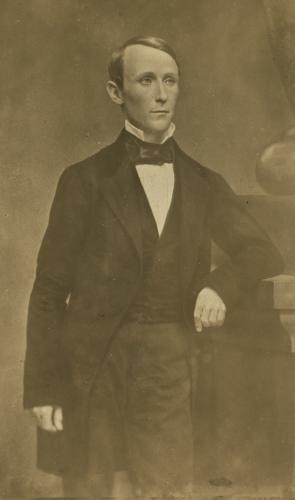
William Walker, ca. 1855–1860, by Mathew Brady (LC-USZC4-10802)William Walker, ca. 1855–1860, by Mathew Brady (Library of Congress Prints and Photographs Division)
On November 8, 1855, on the central plaza of the Nicaraguan city of Granada, a line of riflemen shot General Ponciano Corral, the senior general of the Conservative government. Curiously, the members of the firing squad hailed from the United States. So did the man who had ordered the execution. His name was William Walker. Though later generations would largely forget him, in the 1850s he obsessed the American public. To many, he was a swashbuckling champion of Manifest Destiny. To others, he loomed as an international criminal. In Walker’s own mind, he was a conqueror destined to create a Central American empire. His bizarre career would leave a legacy that shadows the relationship between the United States and Central America to this day.
Soon after his birth in Nashville in 1824, Walker began to manifest unusual intelligence. A gifted student, he graduated from the University of Pennsylvania with a medical degree in 1843, before he turned twenty. He was also restless. He began to wander the globe, from Europe to New Orleans. In the latter city he turned to journalism, editing the New Orleans Crescent.
“He listens to everything in a quiet way, says but little, speaks in a mild and subdued tone, and has rather the appearance and manner of a clerical gentleman,” Commodore Hiram Paulding later wrote. Walker was a small and slender man, with freckles, gray eyes, and thinning hair. “He is said to be remarkable for his abstinence,” Paulding added, “and that wine and the society of ladies have no charm for him.” But these observations did not quite describe Walker during his residence in New Orleans, for there he had a brief relationship with a deaf and mute woman named Ellen Martin. In 1849, she died of cholera, a tragedy that propelled him to San Francisco.
The move turned Walker’s life in a radical new direction. The Gold Rush was in its early stages, attracting tens of thousands to California. The Forty-niners were an independent lot, willing to hazard the long, dangerous journey from the settled states. Duels, gunfights, and brawls erupted regularly.
And there was more to this historical moment than the Gold Rush. Over the previous decade, the United States had expanded deep into Latin American territory, and not always through federal action. Americans in Texas had rebelled against Mexico, established their independence, and won annexation to the United States in 1845. The Mexican War broke out in 1846, leading to the absorption of a third of Mexico—with the assistance of American citizens in California, who staged their own revolt against Mexico.
Enthusiasm for geographical growth came to be known by the newspaper slogan of “manifest destiny,” but it reflected mixed motives. Some Southerners hoped to extend the territory open to slavery. Others felt an evangelical fervor for exporting democracy and Protestantism to the military regimes of Catholic Latin America.
This aggressive expansionism gave rise to a strange phenomenon known as filibustering. Filibusters were independent adventurers who launched freelance invasions of foreign countries, usually aiming to annex them to the United States. The decade before the Civil War saw the great flowering of filibustering. In 1850 and 1851, for example, scores of Americans landed in Cuba in disastrous forays.
The restless Walker decided to become the greatest filibuster of them all. In 1853, he invaded Mexico with a handful of men, and barely escaped alive. The United States government tried him for violating the neutrality act, which prohibited private citizens from warring against foreign nations. But a jury in turbulent San Francisco swiftly exonerated him, turning his failure into a personal (if not military) triumph.
In 1855, he found his next target: Nicaragua. But this time his expedition would be conducted in cooperation with local forces. In its less than two decades of full independence, Nicaragua had suffered from repeated civil wars, waged by the leaders of its two main cities, León and Granada—capitals respectively of the Liberal and Conservative Parties. When the Liberals rose in yet another revolt, Byron Cole, a friend of Walker’s, negotiated a contract for Walker to fight on their side.
Why did Walker care about poor and distant Nicaragua? It was home to one of the key “transit routes” between California and the rest of the United States. Before the construction of the transcontinental railroad and the Panama Canal, most travel and almost all commerce between the two coasts went by steamship to Central America, where two routes crossed the isthmus. The first was in Panama, spanned by the Panama Railroad. The other was in Nicaragua.
In 1851, Cornelius Vanderbilt (known to all as the Commodore) had established the Accessory Transit Company to span Nicaragua and connect to his steamships. The company ran riverboats from the Atlantic port of Greytown, up the San Juan River to Lake Nicaragua. From the lake’s western shore, a twelve-mile carriage road descended to the Pacific port of San Juan del Sur. Accessory Transit carried tens of thousands of passengers each year, making Nicaragua a strategic priority for the federal government. As President James Buchanan later said, “To the United States these routes are of incalculable importance as a means of communication between their Atlantic and Pacific possessions.”
On May 4, 1855, Walker slipped out of San Francisco Bay in the brig Vesta, along with fifty-seven followers (one of whom died at sea). Though he spoke little Spanish, he demanded an independent command when he arrived in Nicaragua. He promptly launched a blundering attack, and was lucky to survive.
But luck was his foremost attribute. The Liberals’ chief executive and commanding general both died soon after his arrival, making him the senior leader on his side. Then Walker carried out perhaps the only inspired maneuver of his career. He commandeered an Accessory Transit steamboat, landed his men in the rear of Granada, and captured the city. He then took hostage the families of the Conservative leaders.
General Corral quickly agreed to terms. Walker, seeking to consolidate his power in the small country, created a unity provisional government, with the weak Patricio Rivas as president, himself as commander of the army, and Corral as secretary of war. Shortly afterward, Walker put Corral on trial for treason and had him publicly executed. The freckle-faced filibuster had made himself into Nicaragua’s strongman.
He would be hard-pressed to remain in power. The neighboring republics, alarmed by his success, prepared for war. And he could not rely on Nicaraguans to fight for him. As he later wrote, “Internal order as well as freedom from foreign invasion depended . . . entirely on the rapid arrival of some hundreds of Americans.” And that made him dependent upon the steamships of the Accessory Transit Company.
Before leaving San Francisco, he had called upon Cornelius K. Garrison, Accessory Transit’s agent there, to ask for passage for himself and his men. Garrison refused. Later, when an Accessory Transit official in Nicaragua donated $20,000 in company gold to Walker’s regime, Garrison fired him immediately.
But Garrison could not remain aloof forever. One of Walker’s closest friends was about to embroil Garrison, and some of the most prominent businessmen in America, in a private war over Walker’s very survival.
That friend’s name was Edmund Randolph, grandson of a Founding Father and a leading attorney in San Francisco. After Walker’s triumph, Randolph paid a visit to Garrison. He explained that he would soon convince Walker to revoke the charter of the Accessory Transit Company (which was a Nicaraguan corporation). Randolph freely admitted that he wanted “a grant for myself of a charter of a similar nature.” He had no steamships, but no matter; he intended to profit by flipping the transit grant, selling it to Garrison as an individual entrepreneur.
Garrison indignantly refused to take part. His partner, Charles Morgan, was the foremost man in Accessory Transit in New York; he could not afford to betray him, even if he was willing to. But Randolph’s certainty about the company’s demise gave him pause. “If things should take that twine,” Randolph recalled him musing, “he did not wish to be involved in the ruin. . . . He would do nothing whatever against the company, but if they fell wanted to save himself.”
The wily Garrison saw a way to save himself, and Morgan as well. He sent his son to Nicaragua, along with Randolph, to negotiate with Walker over the terms for a new line. Once his son reached an agreement, he was to sail for New York to bring Morgan into the plot before it became public knowledge and Accessory Transit shares collapsed in the stock market.
Walker agreed to Randolph’s plan, and the two soon made a deal with Garrison’s son. Morgan and Garrison would pay Randolph for the transit rights and start a new steamship and transit line. Walker would seize the Accessory Transit riverboats and domestic infrastructure, and give them to the two partners. The new line would carry filibuster recruits from the United States for free, accumulating credits toward the cost of the property in Nicaragua. Garrison’s son rushed to New York to explain the arrangement to Morgan.
As luck would have it, at that very moment Morgan was being pushed out of Accessory Transit by Cornelius Vanderbilt. The two had battled over the company for almost three years; Vanderbilt had departed from its management, but at the end of 1855 he began to buy control of its stock. So Morgan readily agreed to Randolph’s plan, and secretly prepared to start the new Nicaragua line.
News of Walker’s revocation of the Accessory Transit charter hit Wall Street like a “bombshell,” the press reported. Vanderbilt rushed to Washington to secure federal aid, but the Cabinet, like the nation itself, was divided over whether Walker was a criminal or a hero. So the Commodore sent a subordinate to retake the company’s steamboats on the San Juan River. He counted on support from the British, who were hostile to filibustering and claimed a protectorate over the Atlantic coast of Nicaragua. The Royal Navy stationed warships in the harbor of Greytown, the little port at the mouth of the San Juan.
But the former Accessory Transit agent in charge of the boats refused to hand over them over, and the British declined to intervene. It was a fateful failure. Had Vanderbilt’s man succeeded, Morgan and Garrison could not have opened their line, and Walker would have been cut off. Instead, Central America descended into war.
In April 1856, Costa Rica launched an invasion of Nicaragua, occupying the city of Rivas. Walker launched a typical frontal assault and was soundly defeated. But his luck held: a cholera outbreak forced the Costa Ricans to retreat, even as Walker gained hundreds of recruits carried by Garrison and Morgan’s new line.
But Walker’s arrogance alienated even his own puppet president, Patricio Rivas, who suddenly denounced him as an usurper and fled over the border. A northern alliance, consisting of Honduras, El Salvador, and Guatemala, marched into Nicaragua, occupying León on July 12. Walker responded by staging a rigged election that made him president. He declared English to be the official language, and issued an edict legalizing slavery. Then the Costa Ricans invaded again from the south.
Walker knew he could survive only if he kept open the flow of reinforcements from the United States. As he later wrote, “It was all-important to keep the transit clear.” So he decided to withdraw to the south and garrison the transit route, from Rivas in the west to forts along the San Juan River. He evacuated Granada, leaving a detachment with orders to burn the city to the ground. When the filibusters finished, they erected a sign that read, “Aqui fue Granada”—“Here was Granada.”
By the end of 1856, Walker felt reassured. “Walker, keeping his forces concentrated, can maintain himself in Rivas,” an American naval officer reported. “If the external aids he has hitherto relied upon do not fail him, he will repel his enemies.”
At that moment, Vanderbilt was moving to cut Walker off from his “external aids.” Walker’s greatest vulnerability, he believed, remained the steamboats on the San Juan River. If Vanderbilt’s agents could seize them, he would force Garrison and Morgan to halt operations and cut off Walker’s flow of reinforcements. This time he negotiated an alliance with Costa Rica. In October 1856, he dispatched a special agent to San José, the Costa Rican capital. The agent, a New Yorker named Sylvanus Spencer, had worked on the San Juan River, which gave him precious knowledge of the steamboat operations.
Spencer arrived in San José with Vanderbilt’s plan of attack and $40,000 in gold to pay Costa Rica’s expenses. President Juan Rafael Mora put him in charge of a commando force. Spencer led the men through the rain forest to the San Juan River, where they captured a filibuster strongpoint and a few steamboats. Then he used his knowledge to bloodlessly seize the rest of the boats and forts—sailing up in a captured steamer, giving the right signals, then surprising the filibusters with soldiers who had been hiding on deck. Within days, Spencer controlled the river. Morgan and Garrison, unable to send passengers and reinforcements across Nicaragua, immediately withdrew their ships. Walker was isolated.
Walker withdrew into Rivas, where the Central American alliance besieged him for months. Finally, on May 1, 1857, he surrendered to an American naval officer, who conducted him and his men out of the country.
In some respects, Vanderbilt’s victory was hollow. Though he inflicted heavy financial losses on Garrison and Morgan, he failed to reopen the transit route. The Nicaraguans could not bring themselves to allow large numbers of North Americans into the country again, lest they face Walker once more.
“That man has done more injury to the commercial & political interests of the United States than any man living,” wrote President Buchanan. But the federal government proved ineffectual in either convicting Walker in court, or in preventing further expeditions. Wherever Walker went in the United States, he was greeted by throngs of admirers.
And so he tried again, and again. On November 25, 1857, he landed at Greytown with 270 followers; in a controversial move, the US Navy forced his prompt surrender. Walker launched a final invasion in 1860. But now his luck ran out. The Royal Navy captured him, then handed him over to the nearest authorities, the Hondurans. On September 12, 1860, Walker faced his own firing squad.
Within a year, the United States plunged into the Civil War. Places with names like Antietam, Shiloh, Gettysburg, and the Wilderness soon obscured Granada, Rivas, and Greytown in the American imagination. Memories of the filibuster faded. But Walker himself had contributed to—or reflected—the nation’s descent into war. He had emerged out of a rising tide of freelance violence; and he had appealed to Southern hopes for expanding slavery by reinstituting it in Nicaragua.
Though he has been largely forgotten in the United States, he is still remembered by Central Americans, who see him as a symbol of imperialism. The fight to eject Walker forms part of Nicaragua’s national legend, a critical period in the formation of its national identity.
If nothing else, his disruption of a critical route to California, his military dictatorship, and his ruthless violence—particularly his wanton destruction of Grenada, one of the oldest cities in the western hemisphere—prove that he was one of the most dangerous international criminals of the nineteenth century, if not all our history.

T. J. Stiles is the author of The First Tycoon: The Epic Life of Cornelius Vanderbilt (2009), for which he received the Pulitzer Prize and the National Book Award, and Jesse James: Last Rebel of the Civil War (2002).

Add comment

Login or register to post comments

Latinos, read this: William Walker yankee imperialist!

William Walker: Ultimate Yankee Imperialist

Walker Aimed to Take Over Nations and Make Them Part of the US

William Walker. Public Domain image
William Walker (1824-1860) was an American adventurer and soldier who became president of Nicaragua from 1856 to 1857. He tried to gain control over most of Central America but failed and was executed by firing squad in 1860 in Honduras.

Early Life

Born into a distinguished family in Nashville, Tennessee, William was a child genius. He graduated from the University of Nashville at the top of his class at the age of 14.
By the time he was 25, he had a degree in medicine and another in law and was legally allowed to practice as both a doctor and lawyer. He also worked as a publisher and journalist. Walker was restless, taking a long trip to Europe and living in Pennsylvania, New Orleans and San Francisco in his early years. Although he stood only 5 feet 2 inches, Walker had a commanding presence and charisma to spare.

The Filibusters

In 1850, Venezuelan-born Narciso Lopez led a group of mostly American mercenaries in an assault on Cuba. The goal was to take over the government and later attempt to become part of the United States. The state of Texas, which had broken off from Mexico a few years before, was an example of a region of a sovereign nation that had been taken over by Americans before gaining statehood. The practice of invading small countries or states with the intention of causing independence was known as filibustering.
Although the U.S. government was in full expansionist mode by 1850, it frowned on filibustering as a way to expand the nation's borders.

Assault on Baja California

Inspired by the examples of Texas and Lopez, Walker set out to conquer the Mexican states of Sonora and Baja California, which at that time were sparsely populated.
With only 45 men, Walker marched south and promptly captured La Paz, the capital of Baja California. Walker renamed the state the Republic of Lower California, later to be replaced by the Republic of Sonora, declared himself president and applied the laws of the State of Louisiana, which included legalized slavery. Back in the United States, word of his daring attack had spread, and most Americans thought that Walker's project was a great idea. Men lined up to volunteer to join the expedition. Around this time, he got the nickname "the gray-eyed man of destiny."

Defeat in Mexico

By early 1854, Walker had been reinforced by 200 Mexicans who believed in his vision and another 200 Americans from San Francisco who wanted to get in on the ground floor of the new republic. But they had few supplies, and discontent grew. The Mexican government, which could not send a large army to crush the invaders, nevertheless was able to muster up enough of a force to skirmish with Walker and his men a couple of times and keep them from getting too comfortable in La Paz. In addition, the ship that had carried him to Baja California sailed off against his orders, taking much of his supplies with it.
In early 1854 Walker decided to roll the dice: He would march on the strategic city of Sonora.
If he could capture it, more volunteers and investors would join the expedition. But many of his men deserted, and by May he had only 35 men left. He crossed the border and surrendered to American forces there, never having reached Sonora.

On Trial

Walker was tried in San Francisco in federal court on charges he violated United States neutrality laws and policies. Popular sentiment was still with him, and he was acquitted of all charges by a jury after only eight minutes of deliberations. He returned to his law practice, convinced that he would have succeeded if he had only had more men and supplies.

Nicaragua

Within a year, he was back in action. Nicaragua was a rich, green nation that had one great advantage: In the days before the Panama Canal, most shipping went through Nicaragua along a route that led up the San Juan River from the Caribbean, across Lake Nicaragua and then overland to the port of Rivas.
Nicaragua was in the throes of a civil war between the cities of Granada and Leon to determine which city would have more power. Walker was approached by the Leon faction -- which was losing -- and soon rushed to Nicaragua with some 60 well-armed men. Upon landing, he was reinforced with another 100 Americans and almost 200 Nicaraguans. His army marched on Granada and captured it in October 1855. Because he was already considered supreme general of the army, he had no trouble declaring himself president. In May 1856, U.S. President Franklin Pierce officially recognized Walker's government.

Defeat in Nicaragua

Walker had made many enemies in his conquest. Greatest among them was perhaps Cornelius Vanderbilt, who controlled an international shipping empire. As president, Walker revoked Vanderbilt's rights to ship through Nicaragua, and Vanderbilt, enraged, sent soldiers to oust him. Vanderbilt's men were joined by those of other Central American nations, chiefly Costa Rica, who feared that Walker would take over their countries. Walker had overturned Nicaragua's anti-slavery laws and made English the official language, which angered many Nicaraguans. In early 1857 the Costa Ricans invaded, supported by Guatemala, Honduras and El Salvador, as well as Vanderbilt's money and men, and defeated Walker's army at the Second Battle of Rivas. Walker was forced to return once again to the United States.

Honduras

Walker was greeted as a hero in the U.S., particularly in the South. He wrote a book about his adventures, resumed his law practice, and began making plans to try again to take Nicaragua, which he still believed to be his. After a few false starts, including one in which U.S. authorities captured him as he set sail, he landed near Trujillo, Honduras, where he was captured by the British Royal Navy. The British already had important colonies in Central American in British Honduras, now Belize, and the Mosquito Coast, in present-day Nicaragua, and they did not want Walker stirring up rebellions.
They turned him over to Honduran authorities, who executed him by firing squad on Sept. 12, 1860. It is reported that in his final words he asked for clemency for his men, assuming the responsibility of the Honduras expedition himself. He was 36 years old.